

The component is not available at this moment. Please contact the site administrator.
by Vanessa M. Greene, J.D.; Employment Law Subject Matter Expert, CalChamber
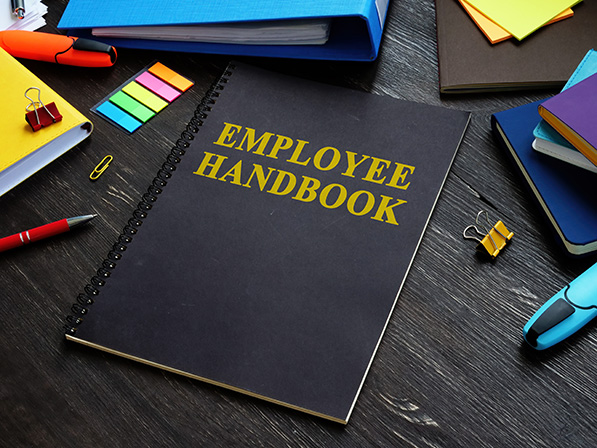
In a state as regulated as California, an employee handbook is one of the most important tools employers have for clear communication, consistent practices and legal protection. It explains how an organization operates and gives employees a reliable place to find answers.
A strong handbook has workplace policies addressing topics that often show up in litigation — wage and hour practices, timekeeping rules, meal and rest breaks, overtime, reimbursements, and complaint procedures. When employees can see those rules in writing, they’re less likely to be surprised later. Plus, clear, well-written policies also help managers apply expectations consistently, reducing the risk of perceived unfair treatment or discrimination.
Read more about what policies employers must have — even if they don't have an employee handbook — plus how an employee handbook is a shared resource for employers and employees, helping to enforce workplace policies with consistency and clarity. Plus, how to tackle creating a new employee handbook — or updating an outdated one.
Although California law doesn’t require employers to have an employee handbook, having one is a best practice. The law does, however, require employers have several written policies — even if they don’t have an employee handbook. For example, all California employers must have a written harassment, discrimination and retaliation prevention policy that is distributed to all employees as well as a written lactation accommodation policy.
Additionally, if employers describe certain kinds of leaves of absence in their employee handbook, they must also include specific family and pregnancy disability leave policies if those laws apply to them. Because these policies are mandatory, many employers choose to keep them in a well-organized handbook alongside other key rules so employees know exactly where to look.
Beyond these legal requirements, several written policies are essential from a best-practice perspective. An at-will employment policy, for example, confirms that either the employee or the employer can end the employment relationship at any time — with or without cause — consistent with applicable law. Clear meal and rest break policies and paid sick leave policies also help show compliance with California’s detailed requirements while giving employees a straightforward place to review their entitlements.
An employee handbook is the chance to provide clarity to employees regarding policies and expectations. It formalizes what may have been communicated informally over time — such as how an employer handles scheduling, performance concerns, time off, benefits and workplace conduct. Instead of every manager answering these questions in their own way, a handbook gives a consistent framework. This not only promotes uniform, nondiscriminatory treatment, it also boosts morale and productivity by reducing confusion and building employee trust.
Plus, the employee handbook can answer practical questions that often get missed during their new hire orientation. Here are just some of the issues it can clear up:
New hires are flooded with information when they start working, and even long-term employees face situations they haven’t seen before. A clear handbook gives them something to refer to when questions come up. Over time, it reduces confusion, limits misunderstandings and reinforces that all employees are being held to the same standards.
When an employer doesn’t have clear policies — or when they exist but aren’t followed — similar situations are handled differently depending on the manager, the employee or the day. Over time, that kind of inconsistency can erode trust and lead to discrimination claims.
Some employers worry that putting too much in writing will box them in or limit their flexibility. But a well-drafted handbook actually provides both structure and discretion with flexibility. It sets out the expectations and outlines typical steps an employer might take with attendance, performance and conduct issues while preserving their ability to deviate when the facts justify it. For example, a discipline section can describe possible measures (e.g., coaching, written warnings, suspension, termination) without guaranteeing that each step will be used in every case.
The goal is to reduce unexplained differences while giving employers room to respond appropriately to serious or unusual situations — helping avoid situations where one employee is fired for conduct that only earned another employee a conversation. And written policies can help managers make decisions confidently and consistently.
Employee handbooks are also where most employers spell out expectations around conduct and communication, including social media, use of company systems and how employees speak about the organization. These policies are important, but they can create legal risk if written too broadly.
The National Labor Relations Act (NLRA) protects employees’ rights to act together to improve their working conditions — unionized or not. This includes discussions about wages, schedules, safety concerns, and other terms and conditions of employment.
In its 2023 Stericycle, Inc. decision, the National Labor Relations Board (NLRB) announced a tougher standard for evaluating workplace rules, including social media and employee conduct policies. Under this approach, a rule can be unlawful if it would reasonably discourage employees from exercising their rights, even if that’s not the employer’s intent.
As a result, broad rules — like blanket bans on “negative” comments about the company — are risky because employees could interpret them as restricting conversations about working conditions. This doesn’t mean you can’t address employees’ workplace conduct; however, employers should connect their policies to legitimate business needs such as preventing harassment, protecting confidential customer information or maintaining safety. When in doubt, a narrower and more specific approach is safer.
Employee handbooks are also legal documents that are often introduced as evidence to show what the employer said its policies were at a given time. For example, handbooks with appropriately detailed policies addressing wage-and-hour policies — such as meal and rest breaks or overtime requirements — can help defend against related lawsuits and demonstrate the employer’s efforts to comply with the Labor Code. If an employer can show not only that they had these policies in place, but also that employees received them and managers were trained on them, that can strengthen their position in wage-and-hour- or harassment-related claims.
But an employee handbook only helps if an employer’s practices match their policies. If managers ignore or contradict company rules, it becomes harder to rely on those written provisions later. In some cases, an outdated or widely ignored handbook can even harm the employer’s credibility. That’s why “create it and forget it” is one of the biggest mistakes employers make when it comes to employee handbooks.
To keep your employee handbook flexible, it should include a short section that reserves the company’s right to change or rescind policies as needed. This “right to revise” language makes clear that the handbook is not a contract with fixed terms and that policies may be updated as laws or business needs evolve.
Employers should also give employees reasonable notice before revising a policy. What is “reasonable” depends on the significance of the change and its impact on employees. And if an employer has a unionized workforce, remember they may have separate bargaining obligations before changing the terms and conditions of employment.
If an employer lacks a current handbook, or the existing one is severely outdated, now is the time to fix it! Many employers start with a California-specific template or online tool that walks them through policy options and local requirements, then customize the language to fit their organization. Once the employee handbook is complete:
Going forward, employers should treat their employee handbook like a living document — reviewing it at least annually and updating it when laws or business practices change.
Whether your company’s handbook just needs a tune-up or you’re starting from scratch, CalChamber’s Employee Handbook Creator (EHC) gives California employers an easy way to build and update handbooks with California-specific content, including city and county requirements.
The EHC Wizard walks you through a series of questions to identify which policies apply to your business, then generates language you can customize. With more than 100 editable policies, most employers will find what they need — and you can still add your own company-specific provisions.
Because CalChamber’s legal team continually tracks changes in California employment law, EHC makes ongoing maintenance easier. When a legal change affects a policy, EHC updates that policy and flags it for you — including email alerts and list of newly updated policies so you know exactly where to focus.
Need additional support when creating your employee handbook using EHC? CalChamber’s Employee Handbook Creator Plus service lets you work with an employment law expert to navigate the EHC Wizard and create a customized company handbook tailored to your business needs.